
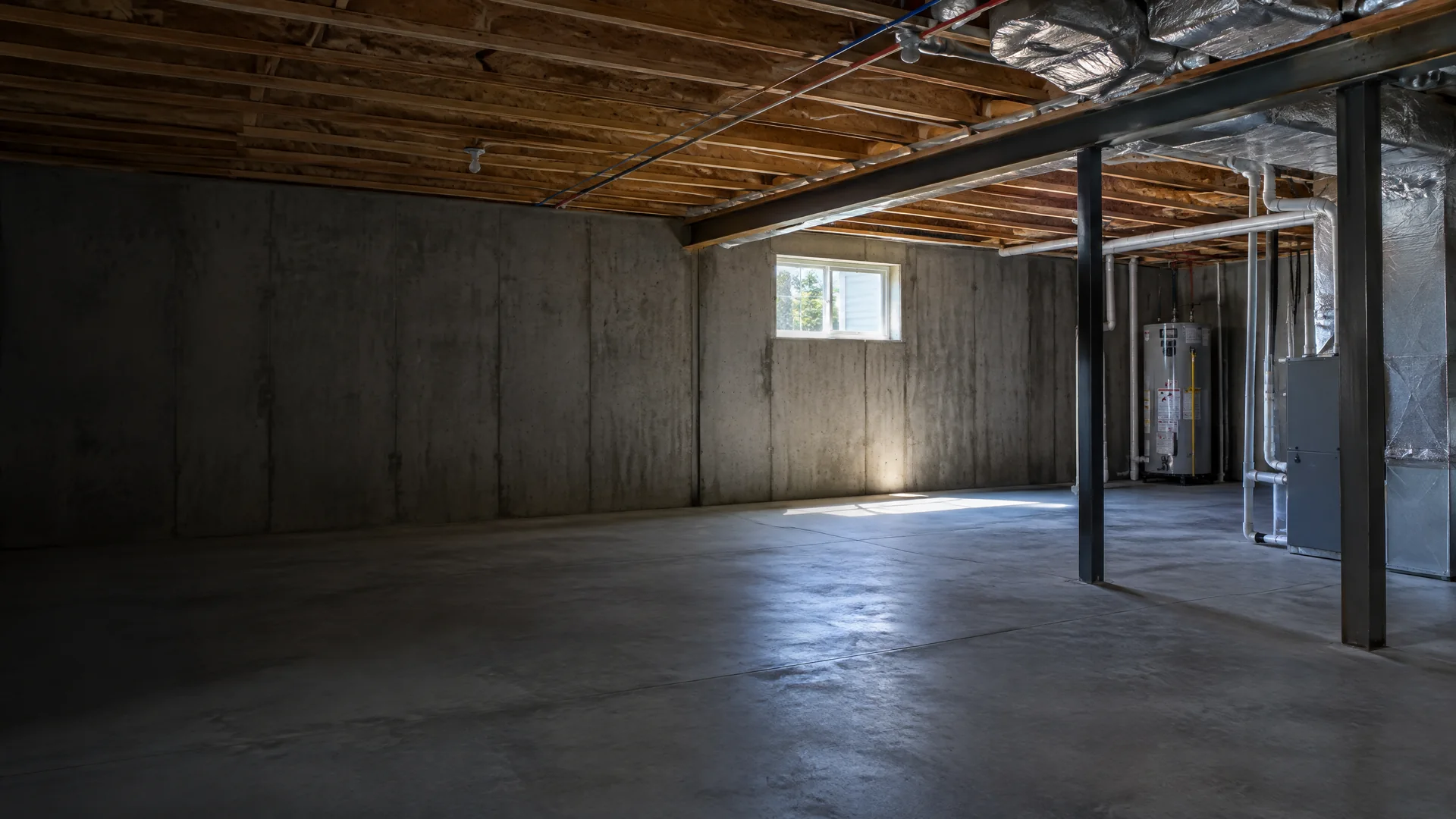
Radon Testing for Your Property
Radon is an invisible, odorless gas that can move from soil into buildings and accumulate indoors. A professional measurement gives you information a visual inspection cannot. Vaultix offers continuous electronic radon testing, including for real estate transactions, with results documented in your digital property report.
Why measure radon?
Radon forms naturally as uranium in soil and rock breaks down. Outdoors it disperses, but it can enter a building through openings around foundations, pipes, drains, and crawl spaces. Once inside, concentrations can vary from one property to another—and they cannot be judged by smell, sight, or the age of a home.
Testing is the practical way to learn what is present during the measurement period. It can be useful when buying, selling, or otherwise evaluating a property, and helps make an otherwise hidden condition part of the decision-making process.
See the homepage service overview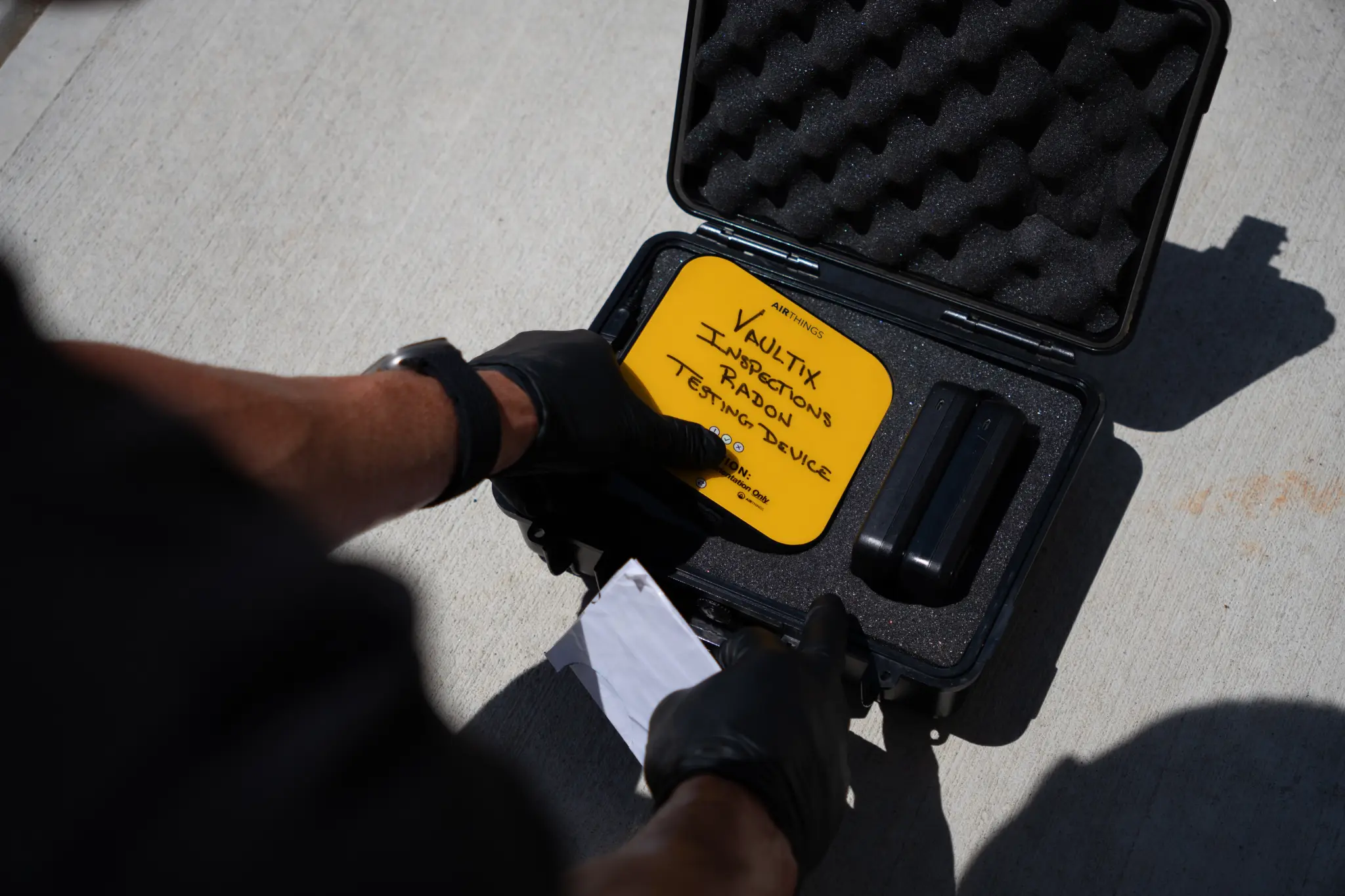
A continuous 48-hour test
Vaultix describes its service as continuous electronic radon testing. A monitor is placed on the lowest livable level of the property for a minimum 48-hour testing period. It records readings over time rather than relying on a single moment, creating a measurement for that defined period.
The test requires access to the property and time for the monitoring period to finish. Vaultix’s FAQ says radon results typically take 48 hours—the stated duration of its test. Ask when scheduling how access, property conditions, or transaction timing may affect the appointment.
- Electronic monitoring takes place over the test period.
- The test is conducted on the lowest livable level, as described by Vaultix.
- The measured radon breakdown is included in Vaultix’s digital property report.
Understand the result
Radon concentration is commonly reported in picocuries per liter (pCi/L). A test result describes the conditions measured during that test; it is not a permanent reading for every season or future use of the building. The U.S. Environmental Protection Agency recommends fixing a home at 4 pCi/L or higher and says homeowners should also consider fixing levels between 2 and 4 pCi/L. These are guidance levels—not a claim that lower exposure is risk-free.
If a result raises concern, review the report and EPA guidance, then consult a qualified radon mitigation professional about appropriate follow-up. Vaultix’s listed service is testing; this page does not promise mitigation, remediation, or a particular outcome.
Useful during a property transaction
Radon testing can be scheduled as part of evaluating a property, and Vaultix presents it as a service that can be paired with a home inspection. Keeping the measurement and the general property inspection with one provider may simplify coordination. Allow for the stated 48-hour monitoring period when planning around a transaction; confirm scheduling and report timing directly with Vaultix.
Serving the Charlotte area
Vaultix lists service across Charlotte and surrounding areas in North Carolina and South Carolina. Contact the team to confirm availability for your property and to arrange a radon test or discuss combining it with an inspection.
THE DETAILS
BEFORE YOU BOOK.
How long does Vaultix’s radon test take?+
Vaultix describes a minimum 48-hour continuous test and says radon results typically take 48 hours. Confirm the appointment and report timing with the team when scheduling.
Where is the monitor placed?+
Vaultix’s service page says the monitor is placed on the property’s lowest livable level for the testing period.
What does a reading of 4 pCi/L or higher mean?+
The EPA recommends fixing a home at 4 pCi/L or higher and advises considering action between 2 and 4 pCi/L. Discuss the measured result and next steps with a qualified radon mitigation professional; Vaultix lists testing, not mitigation, as its service.
Can radon be present in a crawl-space home?+
Yes. Radon can enter from soil beneath a building and move into indoor spaces. A measurement is needed to determine the level during the test period.